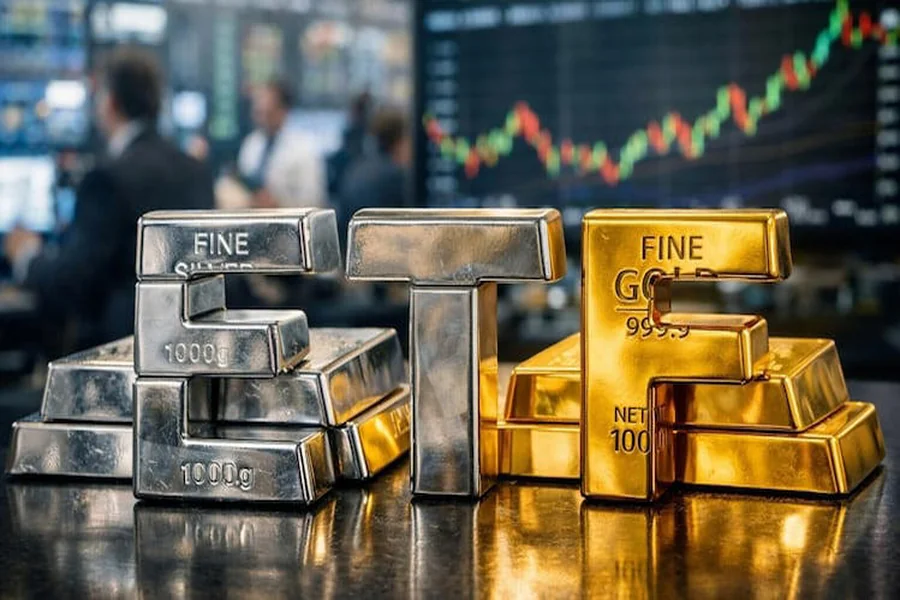
A quiet shift is taking place in global investment markets, and it is happening far from stock exchanges and digital trading platforms. Investors are increasingly turning to physical bullion as a way to protect wealth in an uncertain economic climate. This renewed interest in physical bullion reflects deeper concerns about inflation, currency stability, and trust in financial systems.
One of the biggest drivers behind this trend is persistent inflation. Across major economies, the cost of living remains elevated, eroding purchasing power. While central banks have attempted to control inflation through higher interest rates, many investors remain cautious. Physical gold and silver are seen as a hedge because they tend to hold value over time, especially when paper currencies weaken.
Another factor shaping this movement is growing scepticism toward digital and paper-based assets. Market volatility has exposed the risks tied to stocks, cryptocurrencies, and even certain banking systems. In contrast, physical bullion offers something simple and reassuring. It is a tangible asset that does not depend on a third party.
This sense of control is becoming increasingly valuable.
Demand for physical gold has been particularly strong in regions such as Asia and the Middle East, where cultural and economic factors have long supported gold ownership. In countries like India and China, gold is not just an investment but also a symbol of wealth preservation and financial security. This steady demand provides a strong foundation for the global bullion market.
At the same time, retail investors in Western markets are changing their behaviour. Instead of focusing only on exchange traded funds or mining stocks, more individuals are choosing to buy physical bullion directly. Coins and small bars are especially popular because they are accessible and easy to store. This shift reflects a desire for assets that can be held outside the traditional financial system.
Central banks are also playing a major role. Over the past few years, many countries have increased their gold reserves. This trend signals a broader move toward diversification away from the United States dollar. By holding more gold, central banks aim to strengthen their financial positions and reduce exposure to currency fluctuations.
This institutional demand adds credibility to the case for physical bullion and influences private investors to follow suit.
Supply constraints are another important piece of the puzzle. Mining output has not kept pace with rising demand, and new discoveries are becoming less frequent. At the same time, refining and transportation costs have increased, partly due to higher energy prices. These factors are tightening supply chains and contributing to price support for both gold and silver.
Silver, in particular, is seeing a surge in interest. Beyond its role as a store of value, it is a critical component in renewable energy technologies such as solar panels. As countries invest in green energy transitions, industrial demand for silver is expected to grow. This dual demand, both as an investment and an industrial metal, is shaping new opportunities in the bullion market.
Security and storage solutions are evolving alongside this trend. Investors are no longer limited to home safes or bank deposit boxes. Private vaulting services are expanding, offering insured storage in secure locations around the world. This makes owning physical bullion more practical, even for those holding larger quantities.
Despite its advantages, physical bullion is not without challenges. It requires secure storage, insurance, and careful handling. It is also less liquid than digital assets, meaning it can take longer to convert into cash. However, for many investors, these trade-offs are acceptable given the stability and independence bullion provides.
Looking ahead, the outlook for physical bullion remains strong. Economic uncertainty, geopolitical tensions, and shifting financial systems are likely to keep demand elevated. Investors are not just seeking returns. They are seeking resilience.
In a world where financial landscapes can change overnight, physical bullion is offering something increasingly rare: certainty you can hold in your hand.
This article was brought to you by:
Suite 2, Level 1, 110 Liverpool St
Hobart, TAS, 7000
(03) 6244 2660